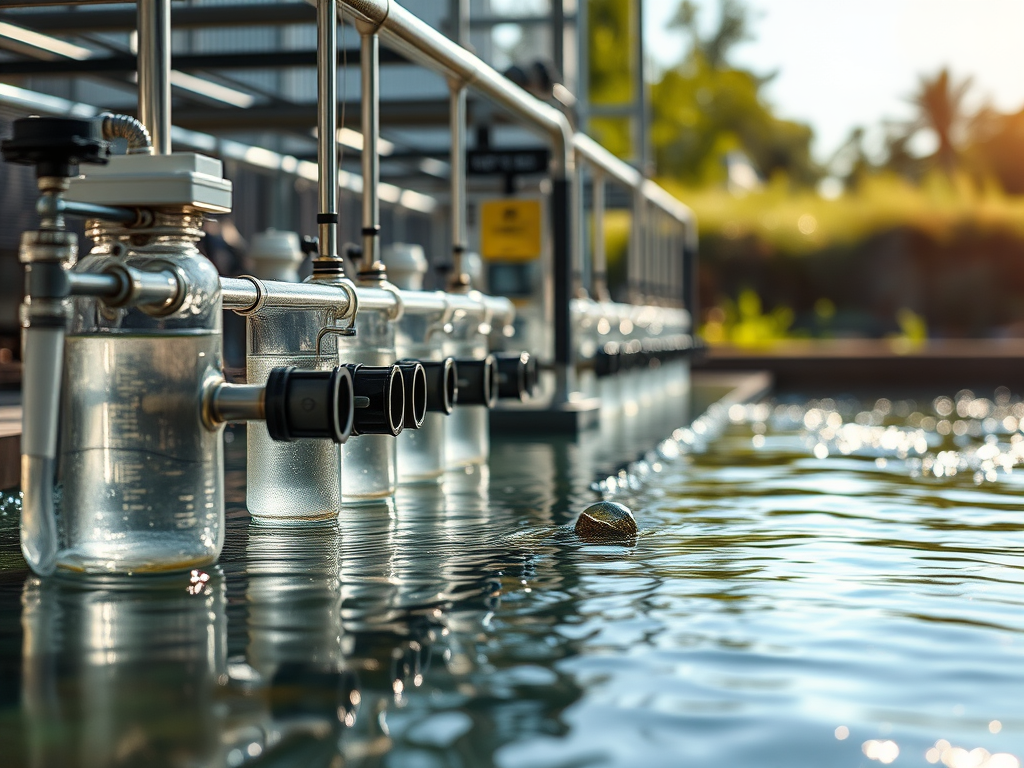
Per- and polyfluoroalkyl substances (PFAS) have emerged as a significant environmental concern in recent years due to their persistence, widespread use, and potential health impacts. As awareness grows about the risks associated with these “forever chemicals,” so does the need for effective remediation strategies. This article explores PFAS remediation, its effectiveness, applications, and the challenges faced in addressing this complex environmental issue.
What are PFAS?
PFAS are a group of synthetic chemicals that have been widely used since the 1940s in various consumer products and industrial applications. These compounds are characterized by their strong carbon-fluorine bonds, which make them extremely resistant to degradation in the environment (1).Some common uses of PFAS include:
- Non-stick cookware
- Water-repellent clothing
- Stain-resistant fabrics and carpets
- Fire-fighting foams
- Food packaging materials
- Cosmetics and personal care products
The persistence of PFAS in the environment has led to their widespread detection in soil, water, and even human blood samples across the globe. This ubiquity, combined with growing evidence of potential health risks, has sparked urgent efforts to develop effective remediation strategies.
The Need for PFAS Remediation
PFAS contamination poses significant risks to human health and the environment. Studies have linked PFAS exposure to various health issues, including:
- Liver damage
- Thyroid disease
- Decreased fertility
- High cholesterol
- Weakened immune system
- Increased risk of certain cancers
Given these concerns, there is a pressing need to remove PFAS from contaminated sites and prevent further spread of these chemicals in the environment. PFAS remediation efforts aim to address this challenge by developing and implementing technologies to clean up contaminated soil and water (2).
PFAS Remediation Technologies
Several technologies have been developed or adapted to address PFAS contamination. These can be broadly categorized into separation/removal methods and destruction technologies.
Separation/Removal Technologies
- Activated Carbon Adsorption: This widely used method involves passing contaminated water through activated carbon filters, which adsorb PFAS molecules. It’s effective for removing longer-chain PFAS but less so for shorter-chain compounds (3).
- Ion Exchange Resins: These synthetic resins can selectively remove PFAS from water through an ion exchange process. They are particularly effective for shorter-chain PFAS that activated carbon may not capture as efficiently (3).
- Reverse Osmosis: This membrane filtration technology can remove a wide range of PFAS compounds, including both long and short-chain varieties. However, it requires significant energy input and produces a concentrated waste stream (3).
- Nanofiltration: Similar to reverse osmosis but using membranes with larger pores, nanofiltration can effectively remove most PFAS while requiring less energy than reverse osmosis (3).
- Foam Fractionation: This technique uses air bubbles to separate PFAS from water, concentrating them in a foam layer that can be skimmed off. It’s particularly useful for treating high-concentration PFAS sources (4).
Destruction Technologies
- Electrochemical Oxidation: This method uses electrodes to generate powerful oxidants that can break down PFAS molecules. It has shown promise in laboratory studies but is still being developed for large-scale applications (5).
- Plasma Treatment: High-temperature plasma can generate reactive species capable of destroying PFAS. This technology is being explored for both water and soil treatment (5).
- Sonolysis: This technique uses high-frequency sound waves to create cavitation bubbles that, when they collapse, generate extreme local temperatures and pressures capable of breaking down PFAS (5).
- Supercritical Water Oxidation: By heating water above its critical point and adding an oxidant, this method can rapidly destroy PFAS compounds. However, it requires specialized equipment and high energy input (5).
- Thermal Destruction: High-temperature incineration (>1000°C) can effectively destroy PFAS, but concerns remain about potential incomplete destruction and atmospheric emissions (5).
Effectiveness of PFAS Remediation
The effectiveness of PFAS remediation varies depending on the specific technology used, the types of PFAS present, and the environmental matrix (soil, water, etc.) being treated. Generally, separation/removal technologies have been more widely implemented and proven effective in field applications, while destruction technologies are still largely in the development or pilot-testing stages (2).
Separation/Removal Technologies
Activated carbon adsorption and ion exchange resins have demonstrated high removal efficiencies (>99%) for many PFAS compounds in drinking water treatment systems. These technologies are relatively mature and have been implemented at full scale in numerous locations (3).
Reverse osmosis and nanofiltration can achieve even higher removal rates, often exceeding 99.9% for a wide range of PFAS. However, these membrane-based technologies produce a concentrated waste stream that requires further treatment or disposal (3).
Destruction Technologies
Destruction technologies show promise in laboratory and pilot-scale studies, with some reporting PFAS destruction efficiencies of >99%. However, their effectiveness in real-world, full-scale applications is still being evaluated (5).
Electrochemical oxidation has demonstrated high destruction efficiencies for various PFAS compounds, including short-chain varieties that are challenging to remove with adsorption-based methods. In one study, >99% removal of long-chain PFAAs was achieved within 120 minutes, while short-chain PFAAs required 6 hours for similar results (5).
Plasma treatment and sonolysis have also shown potential for high PFAS destruction rates in controlled laboratory conditions, but their scalability and cost-effectiveness for large-scale remediation are still being assessed.
Applications of PFAS Remediation
PFAS remediation technologies are being applied in various settings where PFAS contamination has been identified. Some key areas of application include:
- Drinking Water Treatment: Many public water systems have implemented PFAS removal technologies, primarily using activated carbon or ion exchange resins, to ensure safe drinking water for their communities (6).
- Groundwater Remediation: At sites with PFAS-contaminated groundwater, pump-and-treat systems using adsorption or membrane filtration technologies are being employed to clean up aquifers.
- Wastewater Treatment: Municipal and industrial wastewater treatment plants are exploring ways to remove PFAS from effluent to prevent further environmental contamination.
- Soil Remediation: Technologies such as soil washing, thermal desorption, and stabilization/immobilization are being tested and implemented to address PFAS-contaminated soils (7).
- Landfill Leachate Treatment: Landfills often contain PFAS-containing products, leading to contaminated leachate. Treatment systems using various removal technologies are being implemented to address this issue.
- Fire Training Areas: Sites where PFAS-containing firefighting foams were used extensively are prime targets for remediation efforts, often involving a combination of soil and groundwater treatment.
Challenges in PFAS Remediation
Despite the progress made in developing PFAS remediation technologies, several challenges remain:
- Diverse PFAS Chemistry: With thousands of PFAS compounds in existence, developing a single treatment method effective for all varieties is challenging.
- Short-Chain PFAS: Many traditional treatment methods are less effective for short-chain PFAS, which are increasingly used as replacements for long-chain compounds.
- Complex Matrices: PFAS in soil, sediment, or complex wastewater matrices can be more difficult to treat than in drinking water.
- Treatment Residuals: Separation technologies concentrate PFAS in spent media or reject streams, creating a secondary waste management challenge.
- Incomplete Destruction: Some destruction technologies may not fully mineralize PFAS, potentially creating harmful byproducts.
- Cost and Energy Requirements: Many advanced treatment technologies have high capital and operating costs, limiting their widespread adoption.
- Regulatory Uncertainty: Evolving regulations and guidelines for PFAS levels complicate the selection and implementation of remediation strategies.
Future Directions in PFAS Remediation
As research into PFAS remediation continues, several promising directions are emerging:
- Green Remediation: Development of more sustainable, low-energy treatment options, such as phytoremediation or enhanced biodegradation (8).
- Combined Technologies: Integration of multiple treatment technologies to address a broader range of PFAS compounds and achieve higher overall removal efficiencies.
- In Situ Remediation: Advancement of technologies that can treat PFAS in place, reducing the need for expensive pump-and-treat systems.
- Novel Adsorbents: Creation of new, highly selective adsorbent materials designed specifically for PFAS removal.
- Improved Destruction Methods: Refinement of destruction technologies to achieve complete mineralization of PFAS without generating harmful byproducts.
- Source Control: Increased focus on preventing PFAS contamination at the source through product substitution and improved waste management practices.
Conclusion
PFAS remediation is a critical and rapidly evolving field that addresses one of the most challenging environmental issues of our time. While significant progress has been made in developing effective treatment technologies, particularly for drinking water, many challenges remain in addressing the full spectrum of PFAS contamination in various environmental matrices.
The most effective approach to PFAS remediation often involves a combination of technologies tailored to the specific site conditions and contaminant profile. As research continues and technologies advance, we can expect more efficient, cost-effective, and sustainable solutions to emerge.
Ultimately, addressing the PFAS challenge will require a multi-faceted approach that combines remediation efforts with source reduction, regulatory action, and continued research into the health and environmental impacts of these persistent chemicals. By tackling this issue from multiple angles, we can work towards a future where the threat of PFAS contamination is significantly reduced, protecting both human health and the environment.