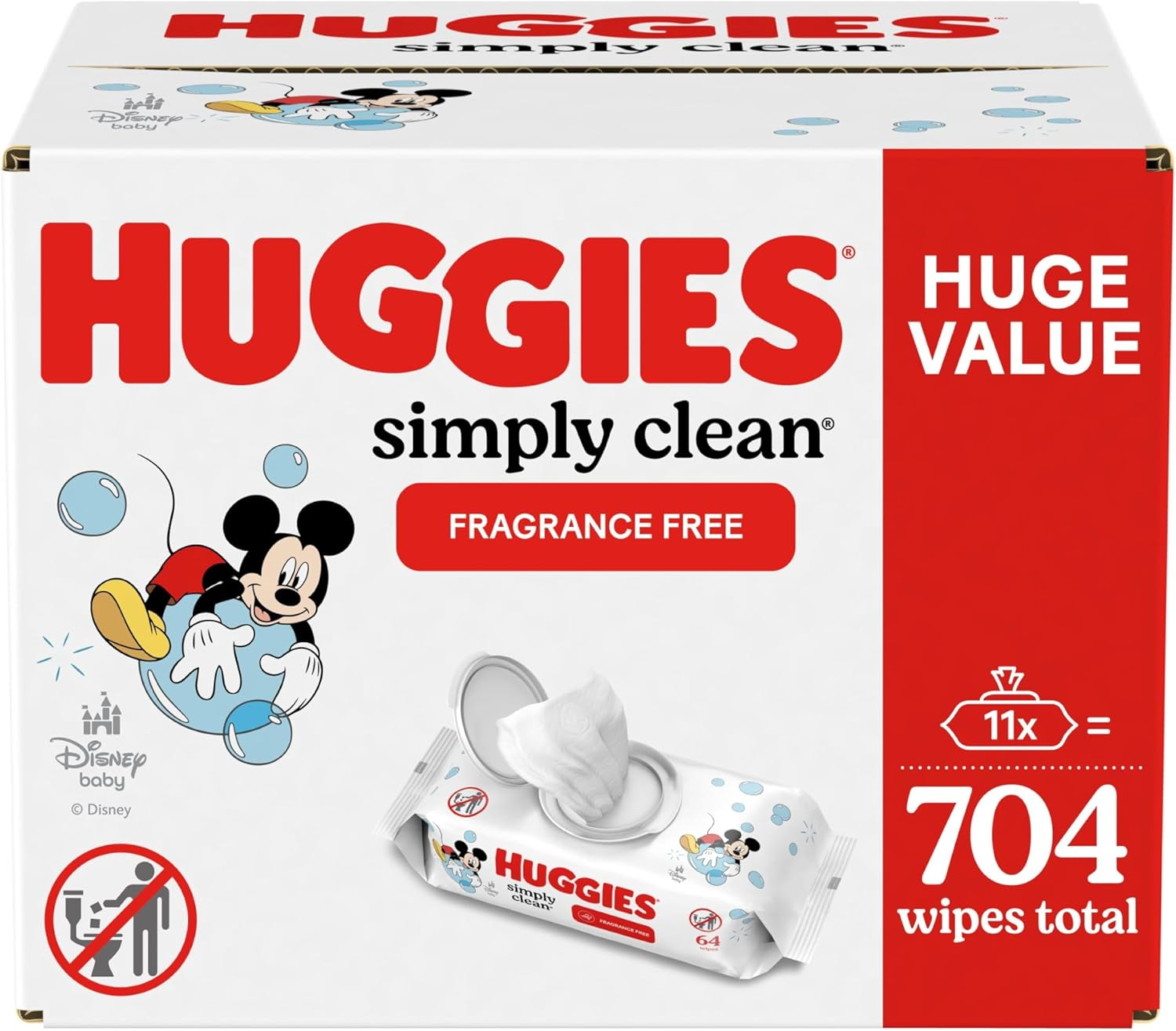
Recent investigations and legal actions have raised serious concerns about the presence of PFAS (per- and polyfluoroalkyl substances) in Huggies baby wipes, particularly their Simply Clean Fragrance Free variety. Here’s a comprehensive look at the situation and what it means for parents.

Current Controversy
A class action lawsuit filed in October 2024 against Kimberly-Clark, the manufacturer of Huggies, alleges that their Simply Clean Fragrance Free baby wipes contain dangerous levels of PFAS while being marketed as “simply clean” and “gentle”. Independent laboratory testing reportedly found these wipes contained 305 parts per trillion (ppt) of PFAS chemicals.
Kimberly-Clark has responded to these allegations, with a company spokesperson stating, “We can assure you that we have tested our Huggies Wipes for PFAS and they are safe”.
Understanding PFAS
What Are PFAS?
PFAS are synthetic chemicals designed to repel water and grease. They’ve earned the nickname “forever chemicals” because they don’t readily break down in the environment. These substances are particularly concerning because they can cause various health issues, especially in developing children.
Health Risks
The potential health impacts of PFAS exposure include:
- Developmental delays in children
- Early puberty
- Behavioral changes
- Thyroid dysfunction
- Cancer
- Impaired vaccine response
- Asthma
Exposure Concerns
The lawsuit raises several specific concerns about baby wipe usage patterns:
Frequency of Exposure
An average baby may use between 10,000-12,000 wipes in their first year alone, creating numerous opportunities for chemical exposure.
Multiple Exposure Routes
PFAS exposure from wipes can occur through:
- Skin absorption
- Accidental ingestion
- Chemical inhalation
Industry-Wide Issue
Huggies is not alone in facing PFAS-related scrutiny. A 2023 Consumer Reports investigation identified several popular brands containing concerning ingredients. Brands flagged for potential risks included:
- Kirkland (Costco)
- WaterWipes
- Amazon Elements
- Coterie The Wipe
- Pampers Aqua Pure
- Pampers Sensitive
- Seventh Generation
PFAS-Free Alternatives
For parents seeking PFAS-free options, several verified alternatives are available:

DYPER Charcoal Enhanced Baby Wipes
These wipes are made with 98% water and bamboo viscose, featuring natural antimicrobial properties through activated charcoal.

Doctor Butler’s Soothing Wipes
These biodegradable wipes contain soothing ingredients like chamomile and calendula, manufactured in SGS-Certified Facilities.

Mustela Compostable Fragrance-Free Wipes
Made with 99% natural ingredients and FSC-certified wood pulp, these wipes are both PFAS-free and compostable.

Pura Baby Wipes
These wipes are 100% PFAS-free, plastic-free, and biodegradable, containing 99% water and organic aloe vera.
Protective Measures for Parents
Immediate Steps
If you’re concerned about PFAS exposure, consider:
- Discontinuing use of potentially affected products
- Consulting with your pediatrician about any concerns
- Switching to verified PFAS-free alternatives
Long-term Considerations
Remember that while the presence of PFAS is concerning, health effects depend on various individual factors. Not every exposure will necessarily lead to health problems, but minimizing unnecessary chemical exposure is prudent, especially for infants.
Regulatory Landscape
The EPA has recently lowered its PFAS health advisory levels to near zero, suggesting that even minimal exposure could be problematic with repeated use. This regulatory shift reflects growing concerns about these chemicals in consumer products, particularly those used on vulnerable populations like infants.
Looking Forward
The ongoing litigation and increased scrutiny of baby care products containing PFAS may lead to industry-wide changes in manufacturing practices. Parents should stay informed about product safety updates and consider using products that have been independently verified as PFAS-free.
The situation with Huggies wipes serves as a reminder of the importance of transparency in baby care products and the need for continued vigilance in protecting our most vulnerable consumers. As research continues and legal proceedings unfold, we may see more changes in how these products are manufactured and regulated.